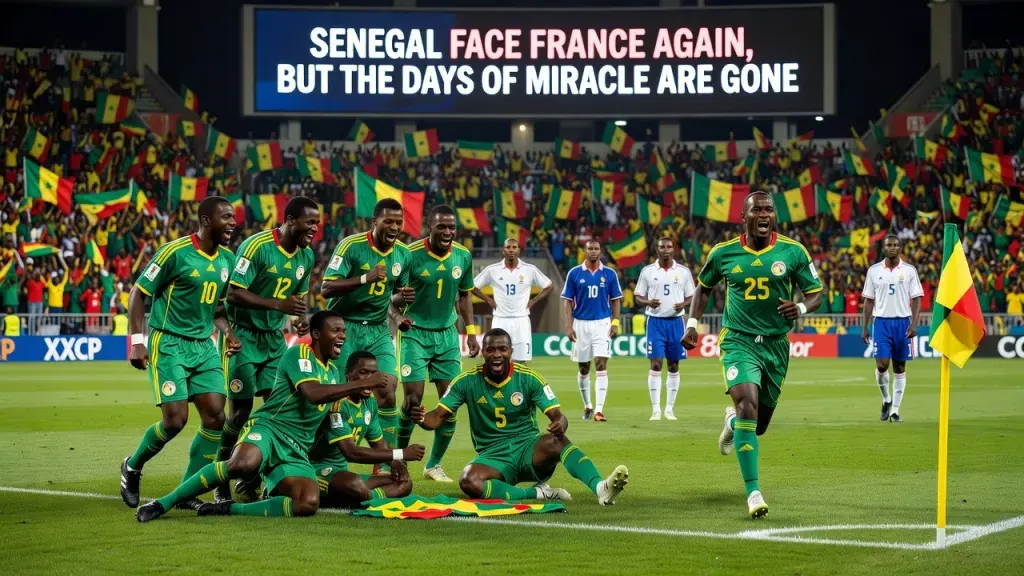
Twenty-three years after one of the most stunning upsets in World Cup history, Senegal and France meet again - and this time, nobody is reaching for the word miracle. The Teranga Lions' 1-0 victory over the reigning world and European champions on the opening day of the 2002 World Cup in South Korea and Japan remains the defining moment of African football at the tournament, a result so charged with context and consequence that it transcends sport. But as both nations prepare for Tuesday's rematch, the landscape has shifted decisively.
Senegal head coach Pape Thiaw addressed the change in perception directly on Monday, arguing that the continent's footballing evolution since 2002 has been profound enough to reframe expectations entirely. "For some people, it may be a surprise, but for me it's not, because African football has changed a lot in recent years," he told journalists. "We saw it during the last World Cup, with Morocco in the semifinals, so it's not a surprise anymore." For those accustomed to tracking the long arc of African football's development - a journey that bears as little resemblance to ante post greyhound betting as any form of sporting prediction can - the trajectory has been unmistakable, built not on luck but on infrastructure, player development and accumulated experience at elite level. ante post greyhound betting
Thiaw went further, articulating an ambition that would have seemed fanciful in 2002. "I hope this year two African teams will face each other in the quarterfinal, or even the semifinal." Given Morocco's run to the last four in Qatar and the depth of quality now present across the continent's squads, that ambition is grounded in something real.
Why 2002 Stands Apart: Debutants Against the Greatest Team on Earth
To understand why that first encounter retains its unique place in the sport's history, you have to reconstruct what France were in the spring of 2002. They were not simply world champions - they had followed their 1998 triumph on home soil by winning Euro 2000, completing back-to-back major titles and cementing a claim to being the finest national side on the planet. Their squad was a who's who of elite European football: Thierry Henry and David Trezeguet up front, Patrick Vieira controlling midfield, Marcel Desailly, Lilian Thuram and Bixente Lizarazu forming one of the most experienced defensive units in the game's history. Even without the injured Zinedine Zidane, they were overwhelming favourites.
Senegal, by contrast, were making their World Cup debut. They had never played at this level before, had no reference point for managing the tournament's weight, and arrived in Asia carrying the expectations of an entire continent rather than merely a nation. The gap, on paper, was vertiginous.
What complicated it - and what makes the result so layered - was familiarity. Almost the entire Senegal squad played their club football in France. Their head coach, Bruno Metsu, was French, born in the northern city of Valenciennes. These players did not arrive as strangers facing an alien system; they arrived as products of French football culture, schooled in French academies and shaped by French clubs. As former Senegal midfielder Salif Diao told the Independent in 2018: "For us, it wasn't like we played against world champions. It was like we were playing against friends."
The Colonial Dimension That Elevates a Result Into History
Beyond the football, the match carried a political and historical weight that could not be separated from what unfolded on the pitch. Senegal was a French colony until 1960. The meeting in Seoul was not simply a fixture between a tournament debutant and the defending champion - it was former colony against former ruler, a confrontation in which the footballers representing Senegal had, in many cases, been formed by the very sporting culture they were now dismantling. That dimension is not incidental to the result's significance. It is central to it.
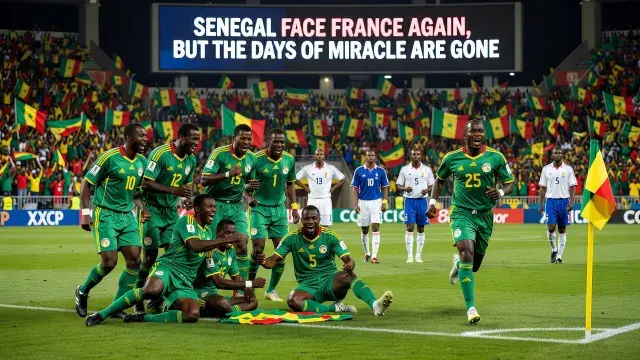
When Papa Bouba Diop scrambled home the only goal and raced to the corner flag, where the Senegal squad gathered around the team's shirt and danced in collective celebration, the image was instantly iconic. It captured not just joy, but something larger - defiance, identity, arrival. It is one of those rare sporting images that carries meaning beyond the ninety minutes it belongs to, and it has endured precisely because of that weight.
A Rematch Between Equals - or Close to It
The Senegal squad that faces France on Tuesday is a different proposition from the one that caused a global sensation in 2002. These are players seasoned by Champions League football, by multiple Africa Cup of Nations campaigns, by the experience of reaching the World Cup quarterfinal in Qatar. Sadio Mané's generation carried Senegal to their first AFCON title and established the country as one of the continent's standard-bearers. Thiaw's current squad inherits that standing and the expectation that comes with it.
France, for their part, remain among the sport's elite, with a squad that continues to regenerate without losing its quality. A Senegal victory on Tuesday would be celebrated vigorously, analysed carefully and respected fully - but it would not stop the world in the way it did on May 31, 2002. That morning belongs to history now. What the Teranga Lions are building is something else: not miracle football, but the expectation of genuine competition. In Dakar, if the result goes their way, nobody will reach for the word upset. They'll simply call it a win.