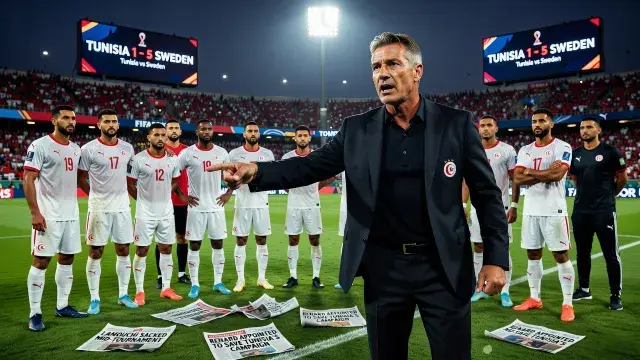
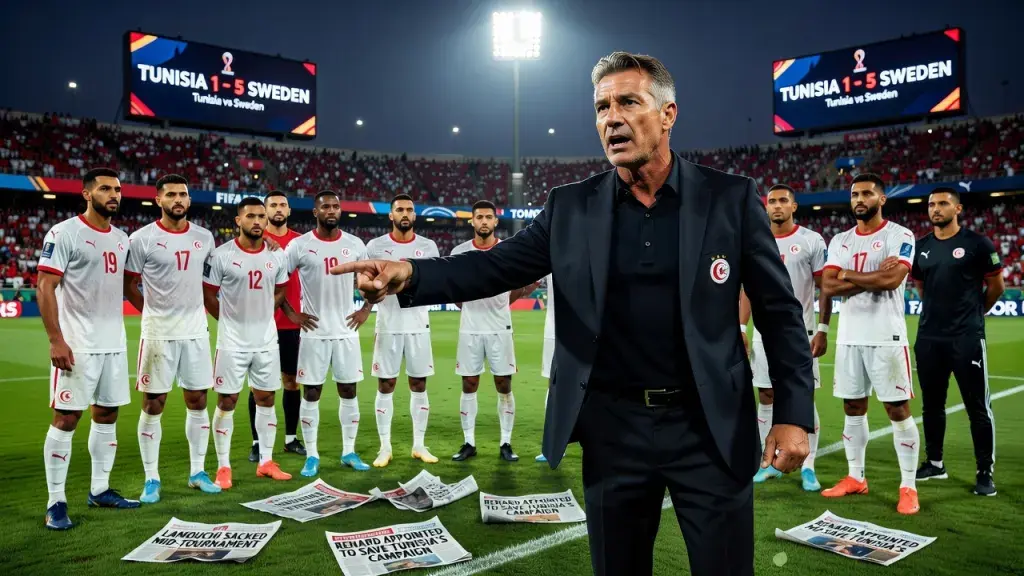
Tunisia have turned to Hervé Renard to salvage their 2026 World Cup campaign after dismissing Sabri Lamouchi following a humiliating 5-1 opening defeat to Sweden, making Lamouchi the first head coach in the tournament's history to be sacked after just one group stage game. The Tunisian Football Federation confirmed the appointment on Monday, with Renard taking charge until the end of the competition as the Carthage Eagles look to avoid yet another first-round exit.
Renard, 57, had been without a job since Saudi Arabia ended his second spell in charge of their national team in April. His mandate is immediate and specific: steer Tunisia through their remaining group fixtures against Japan on June 20 and the Netherlands on June 25 and engineer a historic first progression beyond the group stage - a feat the country has never managed across six World Cup appearances. The contrast between the gravity of the task and the almost frantic circumstances of his appointment could hardly be sharper, though for those familiar with Renard's career, crisis management in international football is territory he knows well - much like how niche sports enthusiasts seek out biathlon bets online canada to navigate a specialist market, Renard has built his reputation precisely on finding angles others overlook.
The FTF confirmed that the agreement includes a clause providing for negotiations after the tournament regarding a potential long-term collaboration, suggesting the federation views Renard as more than a firefighter. Whether that conversation materialises will depend almost entirely on what happens over the next two weeks.
A Damaging Defeat and a Record No One Wanted
The trigger for the dismissal was as stark as any seen at a World Cup. Tunisia were overwhelmed by Sweden, conceding five times in a performance that left Lamouchi visibly shaken at his post-match press conference. "We made way too many mistakes," he said. "We have our pride. We need to react. We need to give a better image." Within 24 hours, he was gone, stripped of the opportunity to act on those words himself.
Lamouchi had only been appointed five months earlier following the departure of Sami Trabelsi, who left after Tunisia were knocked out on penalties by Mali in the last-16 of AFCON 2025. In that short tenure, the 54-year-old - a well-travelled coach with stints at Ivory Coast, Rennes, Nottingham Forest, Cardiff City and Al Riyadh on his CV - won just one of five games, a 1-0 friendly victory over Haiti in March. It was a fragile foundation from which to launch a World Cup challenge, and Sweden exposed every crack.
Tunisia's decision places Lamouchi in unwanted history. But the federation itself is no stranger to this particular brand of desperation. In 1998, they sacked Henryk Kasperczak mid-tournament after defeats to England and Colombia, replacing him with Ali Selmi for the final group game against Romania, which ended 1-1. Nearly three decades on, the pattern has repeated.
Renard's Record Makes Him the Logical Choice
Whatever the circumstances, the appointment of Renard represents a significant upgrade in managerial pedigree. Few coaches in the modern era carry as much credibility in African and international football. He won the Africa Cup of Nations with Zambia in 2012 and Ivory Coast in 2015 - two titles that remain among the most celebrated in the continent's recent history and that cemented his standing as one of the foremost international coaches of his generation.
His work at the World Cup has been equally notable. He led Morocco at France 1998 - their first finals appearance in two decades - and returned to the tournament stage with Saudi Arabia in 2022, where he masterminded a group stage victory over eventual champions Argentina that ranks among the great World Cup upsets. At the 2023 Women's World Cup, he guided France to the quarter-finals. He brings a level of tournament experience that no other available coach could realistically match on such short notice.
The Road Ahead Is Steep
Tunisia's remaining fixtures offer little comfort on paper. Japan are an organised, technically proficient side with genuine ambitions of advancing, while the Netherlands represent a formidable European challenge. For Tunisia to progress from the group stage for the first time in their history, they would likely need results in both games.
Renard will have minimal time to implement any structural changes, but his value in these situations tends to be less about tactical overhaul and more about psychological restoration - the ability to walk into a dressing room that has just been publicly humiliated and make players believe a different outcome is possible. He has done it before in more than one country. Whether he can do it again, in less than a week of preparation, is the question Tunisian football will be watching very closely.