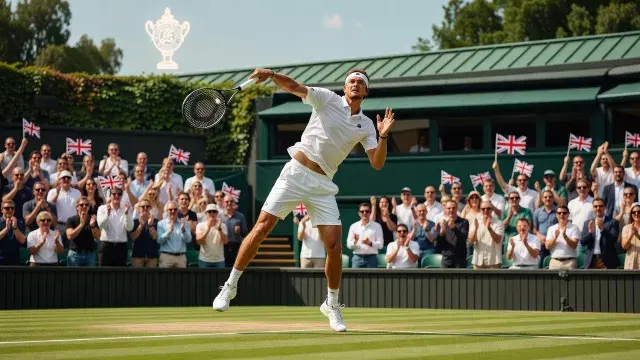
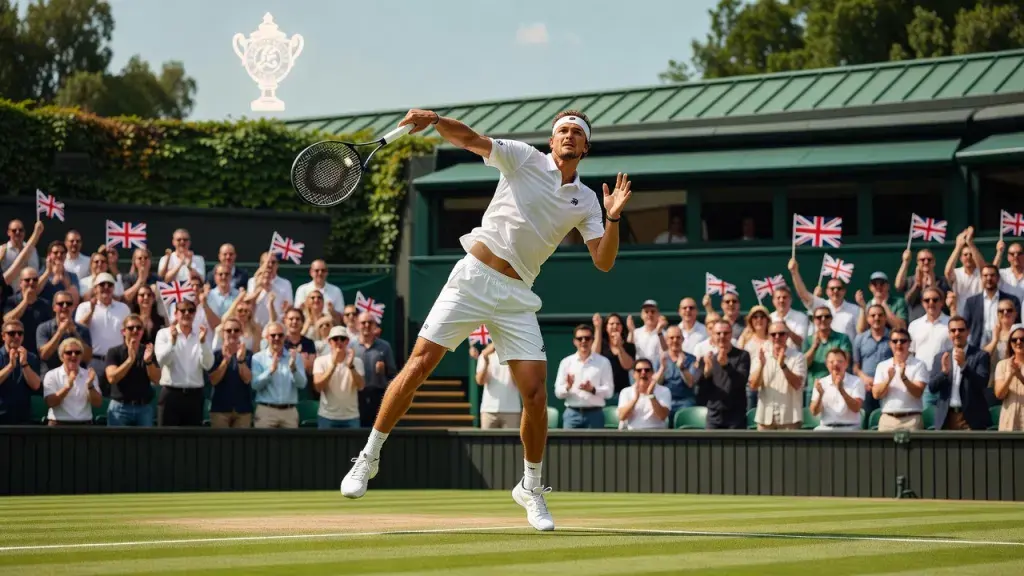
Alexander Zverev arrives at Wimbledon this year as a transformed competitor. Twelve months after suffering an early and deflating elimination at the All England Club, the German has reshaped his grass-court narrative on the back of a French Open title that appeared to lift a significant psychological weight from his shoulders. Now, with a last-sixteen clash against British wildcard Arthur Fery ahead, Zverev stands within reach of a Roland Garros-Wimbledon double - a combination that would confirm his place among the elite players of his generation.
The French Open win was more than a trophy. It was a breakthrough moment that cut through years of Grand Slam near-misses and mounting questions about whether Zverev could deliver when the pressure peaked. In a broader sporting landscape where athletes across disciplines regularly face scrutiny over their ability to perform under weight of expectation - much like rising talents in football such as afonso moreira who face their own crossroads moments at club level - Zverev's Roland Garros triumph represented a decisive answer to his critics. His recent victory over Taylor Fritz, which ended a difficult run of defeats against the American, reinforced the sense that something has genuinely shifted in his mentality and form.
Handling the Home Crowd Factor
Facing Arthur Fery, a British wildcard, inside Wimbledon means Zverev will be operating in front of a crowd that will overwhelmingly back his opponent. Fery carries the enthusiasm of a home crowd behind him - an advantage that can rattle even seasoned professionals in the early rounds of a Grand Slam. Zverev, however, has been measured and deliberate in his response to this dynamic. He has pointed to his experience at the highest level as the factor that will allow him to manage the atmosphere, to absorb the noise and refocus when momentum shifts against him. His record in major tournaments gives him a legitimate basis for that confidence.
There is also an element of quiet self-assurance in the way Zverev has framed the occasion. "It's just another tennis match," he said, a statement that, while straightforward, signals a mental recalibration that only comes with genuine self-belief rather than forced bravado. For a player who has at times appeared visibly affected by the scale of Grand Slam occasions, this composure is itself meaningful.
A Historic Opportunity for German Tennis
Beyond the personal dimension, Zverev is competing for a place in German sporting history. No German man has won Wimbledon since Michael Stich lifted the trophy in 1991 - a stretch of more than three decades. Stich's victory remains one of the landmark moments in German tennis, and Zverev is acutely aware of the historical weight attached to what he is attempting. That awareness, however, does not appear to be burdening him. His approach throughout the tournament has been measured: focus on execution, control the controllable, and let the implications take care of themselves.
The Roland Garros-Wimbledon double is an exceptionally rare achievement in men's tennis, requiring a player to excel on clay and then immediately adapt to grass - two surfaces with fundamentally different demands on movement, ball speed, and tactical approach. The fact that Zverev is genuinely positioned to pursue that double underlines how complete his current form is. His serve is a weapon that translates well to grass, and his groundstroke consistency, allied with improved first-strike tennis, makes him a credible contender on this surface in a way that was not always the case earlier in his career.
What the Next Round Represents
The match against Fery is not a formality. Wildcards at Wimbledon frequently carry dangerous levels of motivation and familiarity with the conditions, and a partisan crowd can amplify the threat significantly. Zverev will need to manage the early stages carefully, establish his rhythm, and avoid the kind of erratic spell that has occasionally derailed him in high-pressure environments. If he navigates Fery successfully, the broader draw and the scale of the prize on offer will sharpen with every round. For now, Zverev's task is clear: win the next match, and let the history write itself.